Drive-Through Car Wash vs Hand Wash: What It Does to Your Paint
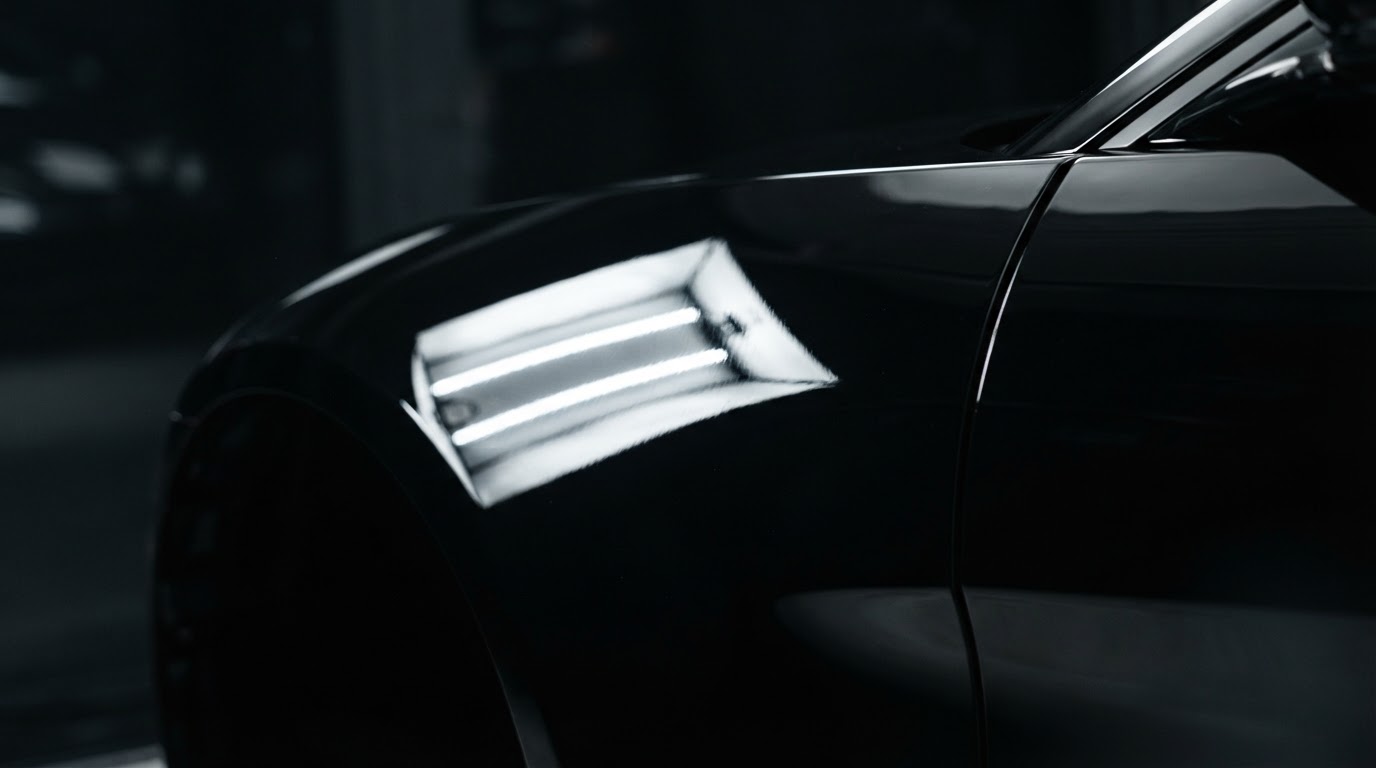
Yes, drive-through car washes with spinning brushes scratch paint, and the damage is cumulative. Those brushes carry grit from every vehicle that came before yours and drag it across your clear coat, leaving the fine spiderweb scratches known as swirl marks. A proper hand wash lifts dirt away instead of grinding it in. Here is exactly what happens at each type of wash, and what it takes to undo the damage.
Do automatic car washes really scratch your paint?
The brushes are the problem, not the water. A drive-through wash runs hundreds of vehicles through the same equipment, and every one of them leaves behind sand, brake dust, and road grit. That debris embeds in the brush material. When those bristles hit your car, they are effectively fine sandpaper spinning at speed.
The result shows up under direct sunlight or a gas station light: a haze of circular scratches across the hood, roof, and trunk. On black and dark paint it is obvious. On silver and white it hides longer, but it is doing the same thing, dulling the finish and cutting the depth of the color.
What is the difference between the wash types?
| Wash type | How it works | Risk to paint |
|---|---|---|
| Drive-through with brushes | Spinning cloth or foam brushes make physical contact | High. This is the main cause of swirl marks |
| Touchless automatic | High pressure water plus strong chemicals, no contact | Low for scratching, but harsh detergents strip wax and sealant |
| Self-serve bay wand and brush | You hold the wand; the provided brush sits in dirty water | High if you use the brush, low if you use the wand only |
| Professional hand wash | Foam pre-soak, clean mitt, two-bucket method, soft drying towels | Minimal. Dirt is lifted and rinsed, not dragged |
Why does the two-bucket method matter?
This is the part most people have never heard of, and it is the whole game. One bucket holds clean soapy water. The second holds plain rinse water with a grit guard at the bottom. After every panel, the mitt goes into the rinse bucket first so the dirt falls out and stays trapped, then back into the clean soap.
Skip that step and you are re-applying the same grit you just removed, panel after panel. It is the home-driveway version of the exact mistake the drive-through makes. Add a foam cannon pre-soak, which loosens and floats off the heavy grit before anything touches the paint at all, and you have the process we use on every Standard Detail.
Can swirl marks be fixed?
Yes, if they are in the clear coat, which most swirls are. Machine paint correction uses a polisher and abrasive compounds to level the clear coat down to the base of the scratches, which removes them rather than hiding them. Our Premium Detail includes a one-step correction that removes 60 to 80% of swirls and light scratches.
Two honest limits. First, your clear coat is finite, so correction is not something to do every year. Second, if a scratch has gone through the clear into the base coat, polishing will not bring it back and that becomes a paint repair. Our paint correction explainer covers how to tell the difference.
What about wax and glaze at the drive-through?
The spray wax at the end of an automatic wash is a very thin gloss enhancer. It looks good leaving the tunnel and is largely gone within a couple of weeks, especially through a Missouri summer. It also does something worse: the gloss temporarily fills and masks swirl marks, so the damage keeps accumulating while the car looks fine to you.
What is the right routine if you want to stop the damage?
- Avoid brush tunnels entirely. This is the single highest-impact change.
- Touchless is acceptable between details when you need a quick clean, understanding it strips protection over time.
- Hand wash every two to three weeks with pH neutral soap, two buckets, and a clean microfiber drying towel.
- Correct once, then protect. A one-step correction resets the paint, and a ceramic coating then takes the abuse in place of your clear coat, which is why coated cars keep their gloss for years instead of months.
Frequently Asked Questions
Are touchless car washes safe for paint?
They are much safer than brush tunnels because nothing physically contacts the paint. The tradeoff is that touchless washes rely on strong alkaline detergents to compensate, and those strip wax and sealant. They will not scratch your car, but they will shorten the life of your protection.
How can I tell if my car has swirl marks?
Look at the hood in direct sunlight or under a single bright light at night. If you see fine circular scratches radiating out around the light source, those are swirls. They are usually easiest to see on the horizontal panels.
Does a ceramic coating stop swirl marks?
It reduces them significantly but does not make paint scratch-proof. The coating is a harder sacrificial layer, so light wash marring hits the coating instead of your clear coat. Brush tunnels will still damage a coated car, which is why we tell coated clients to avoid them entirely.
Is a hand wash worth the extra money?
Over the life of the vehicle, yes. A few years of brush washes typically leads to a paint correction to fix the finish, which costs far more than the difference in wash price. Protecting the clear coat is cheaper than restoring it.
Do you offer maintenance washes in Kansas City?
Yes. Our maintenance membership covers scheduled hand washes done the correct way, at your home or office anywhere in the KC metro.
Stop grinding grit into your paint
If your car has been through the tunnel a few too many times, send us a photo in daylight and we will tell you straight whether it needs a correction or just a proper wash. Call or text (816) 608-7944 or book online. See all packages and services here.
Ready to Protect Your Vehicle?
Experience the convenience and quality of Matrix Mobile Details. We bring the showroom shine directly to your driveway.
Book Your Detail Now